

Summary
To reverse engineer a rubber component, a manufacturer measures the sample with CMM or 3D scanning, identifies the base polymer and hardness (FTIR, TGA, ASTM D2240), then recreates the geometry and selects a compound that matches the original’s performance in its fluid and temperature environment. A failed or swollen sample distorts dimensions and properties, so an unused part, the mating hardware, and the operating conditions improve accuracy. Validate the replacement with first-article inspection and application testing before production.
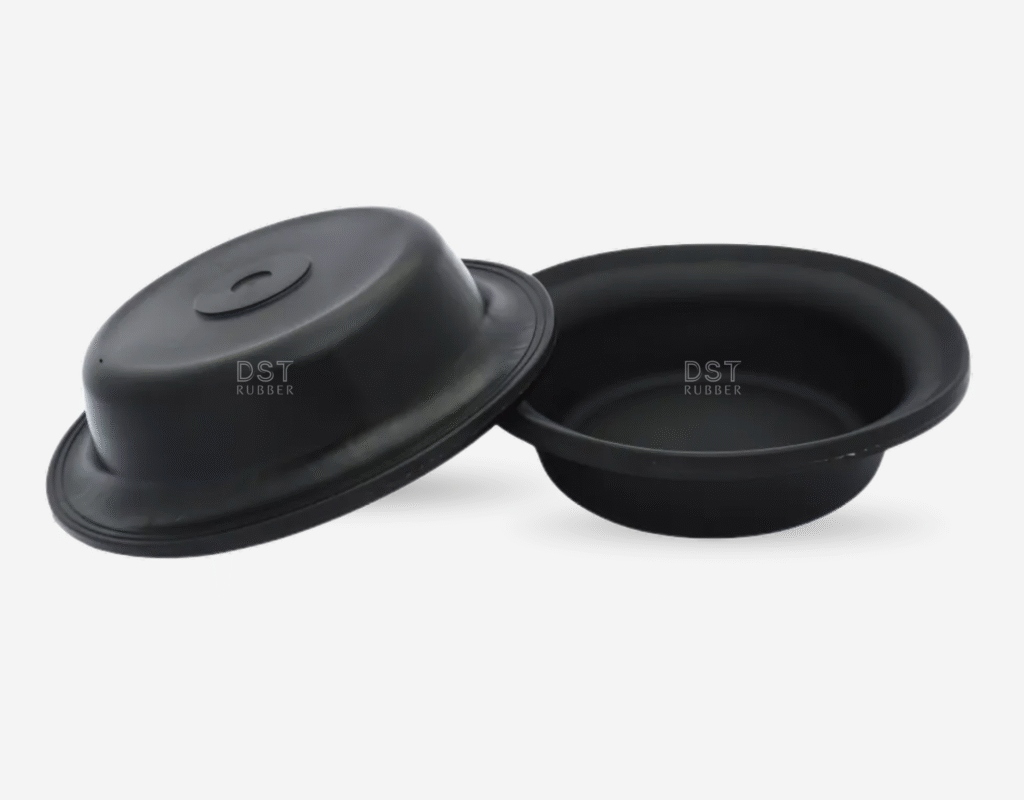
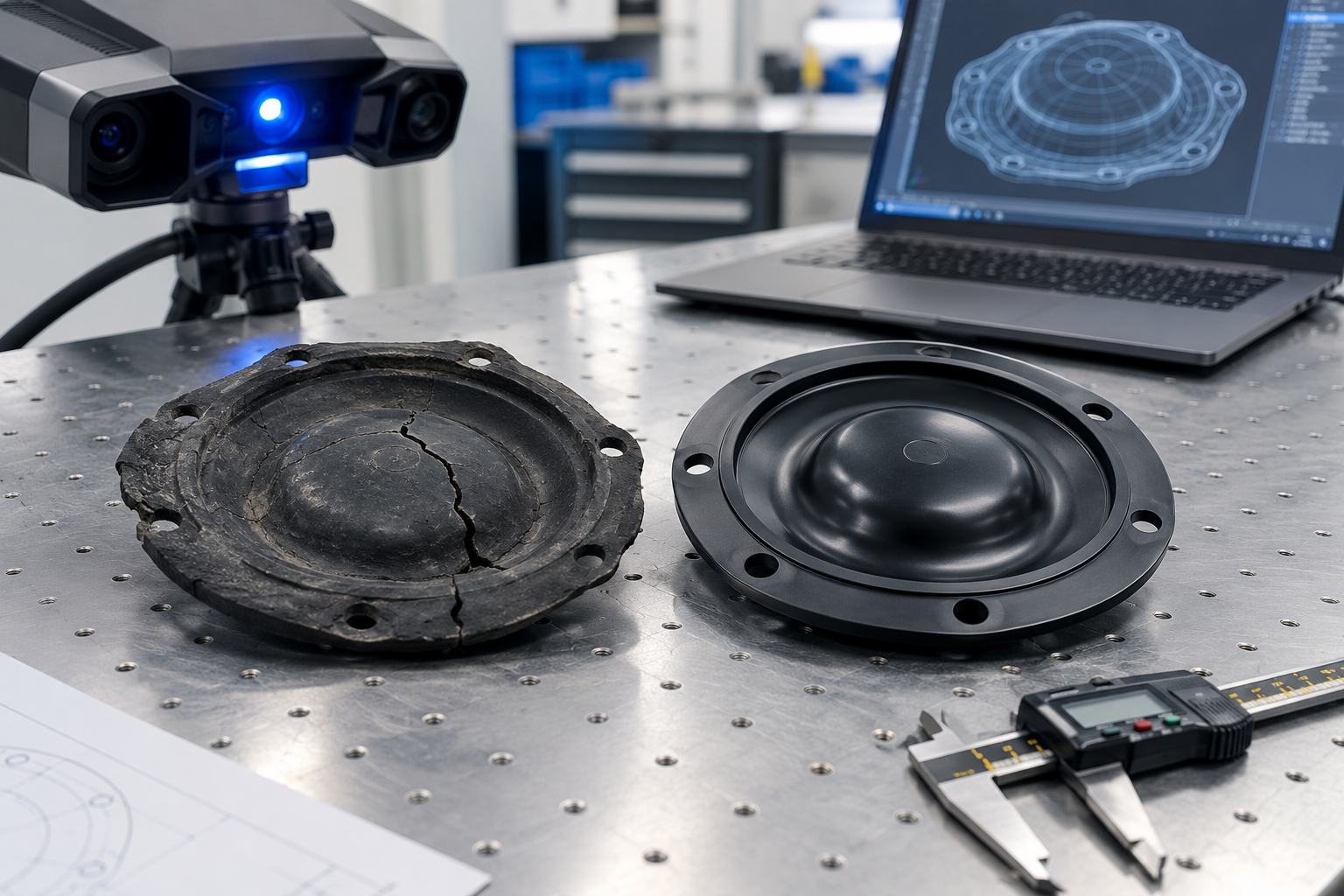
A pump stops. The maintenance team pulls it apart and finds a cracked, swollen diaphragm with no part number, no drawing, and an OEM that discontinued the assembly years ago. Downtime costs money every hour, and ordering a full replacement unit may cost far more than the rubber component that failed. Reverse engineering turns that failed sample into a drawing, a material specification, and a replacement part you can reorder. This guide explains how the process works, what a lab can and cannot recover from a damaged sample, and how to validate the result before it goes back into service.
When Reverse Engineering Makes Sense
- The OEM discontinued the part, or lead time for a genuine replacement runs far longer than your downtime allows.
- The original drawing no longer exists, or the part came as an unmarked component inside a sealed assembly.
- The original part fails repeatedly, and you want a better compound for your actual fluid and temperature.
- You want a second source for a critical wear part to protect against supply disruption.
Maintenance managers usually start the search after a breakdown. R&D engineers usually start it when a program needs a localized or cost-reduced version of an existing part. Both groups face the same question: can a supplier rebuild the part from the sample alone?
The Reverse Engineering Process, Step by Step
The table below shows the sequence a capable supplier follows and what you should receive at each stage.
Step | What Happens | What You Get |
|---|---|---|
1. Intake and failure review | Engineers log the sample, photograph the failure, and review your operating conditions. | Failure hypothesis (swell, hardening, tear, extrusion, fatigue) |
2. Dimensional capture | CMM, optical, or 3D scanning measures geometry. Engineers account for swell or set in the used sample. | Dimensioned drawing or CAD model |
3. Material identification | FTIR identifies the base polymer. TGA estimates filler and polymer content. Shore A hardness follows ASTM D2240. | Polymer family, hardness target, filler profile |
4. Compound selection | Engineers choose a compound for your fluid and temperature, often improving on the failed original. | Material recommendation with ASTM D2000 callout |
5. Tooling and samples | The shop builds a mold and runs first-article samples. | Sample parts with inspection report |
6. Validation | You fit-test the part and run application or bench testing against your acceptance criteria. | Approved replacement part and spec |
What a Failed Sample Can and Cannot Tell You
What the lab can recover
A failed part still carries useful data. Engineers can capture geometry, identify the base polymer through FTIR spectroscopy, estimate filler and polymer content with thermogravimetric analysis, and measure hardness under ASTM D2240. They can also read the failure itself. A compression-set failure, a swollen section, a hardened skin, and a torn bead each point toward a different cause, and each changes the compound recommendation.
What the lab cannot fully recover
The exact formulation stays with the original manufacturer. Curative systems, plasticizer levels, and additive ratios do not reveal themselves cleanly from a single aged sample, and an aged sample misleads measurements. Rubber that sat in fluid swells, and rubber that ran hot hardens. Engineers correct for both, but they work from estimates. That is why serious reverse engineering matches performance rather than chasing a chemical clone, and why validation testing matters as much as measurement.
What a Failed Sample Can and Cannot Tell You
Two parts that look identical can need different compounds. Fluid exposure, temperature, pressure, and cycle rate decide whether a part survives. Take a pump diaphragm in a diesel exhaust fluid system. AdBlue, the 32.5 percent urea solution defined in ISO 22241, attacks some elastomers and leaves crystalline deposits that stress sealing surfaces. A replacement for that part needs a compound proven against urea solution, not just one that matches the failed sample’s hardness. Tell the supplier what the part touches, how hot it runs, and how it failed, because those answers shape the compound more than the shape of the rubber does.
DS Rubber documents this exact scenario in its AdBlue pump reverse engineering case study, which shows how the team moved from a failed sample to a validated replacement. Browse more rubber manufacturing case studies to see how the same process applies to other components.
What to Send With Your Sample
- The failed part, plus any unused part of the same type. An unused sample improves dimensional accuracy sharply.
- The mating hardware, or a drawing of the groove, seat, or housing the part seals against.
- The fluid or chemicals the part contacts, with concentrations where you know them.
- Operating temperature range, pressure range, and cycle frequency.
- A short account of how and when the part failed, including mileage or hours in service.
- Annual usage, so the supplier can recommend a tooling approach that fits your volume.
A Note on Intellectual Property
Replacing a standard wear part on your own equipment is routine. Patents, design rights, and supply contracts can still limit what you may reproduce. A responsible supplier asks about authorization on proprietary parts, and you should welcome that question. If a component carries patented features, secure permission before you order.
Why Engineering Depth Matters in a Reverse Engineering Partner
Anyone can scan a part. The value sits in what happens next: reading the failure, choosing a compound for the real environment, and building tooling that holds tolerance in production. Review the DS Rubber engineering capabilities to see how the team approaches compound selection, tooling, and validation, and explore the company’s custom rubber products program for replacement and low-volume work. The same custom rubber manufacturing processes that serve OEM programs support one-off and repeat replacement parts.
Send Us Your Failed Sample
If a rubber part has failed and you need a replacement, start with the sample and the story behind it. Review our engineering process and our past case studies, then contact our engineering team to arrange a sample review. You can also request a custom quote once you know your volume and timeline.
Frequently Asked Questions
Usually yes, with limits. A failed part still shows its geometry, polymer family, and approximate hardness. Swelling, hardening, and wear distort those readings, so the lab cross-checks them against the mating hardware, the operating fluid, and the failure mode. An unused sample of the same part gives much better data.
Rarely, and it does not need to. Labs can identify the base polymer, filler type, and hardness, but the exact formulation (curative system, plasticizers, additive ratios) belongs to the original manufacturer. The goal is a compound that matches the original’s performance in your fluid, temperature, and pressure conditions, confirmed by testing.
Send the failed part, any unused part, the mating hardware or a drawing of the groove or seat, the fluid or chemicals it contacts, operating temperature and pressure range, cycle frequency, and a description of how it failed. The failure story often decides the compound choice.
Replacing a standard wear part for your own equipment is common practice, but patents, design rights, and contractual terms can apply to some components. Confirm you have the right to reproduce the part, and expect a responsible supplier to ask. If the part carries proprietary or patented features, get authorization first.
Timelines depend on part complexity and tooling. Measurement and material analysis usually come first, followed by tooling and first-article samples. Ask the supplier to quote analysis time, tooling time, and sample time separately so you can plan your downtime and spares.
Talk to Us About Your Volume
If your program needs a low-volume run, a pilot batch, or a bridge-tooling order, tell us your part, compound requirement, and target quantity and request a custom quote. You can also contact our engineering team first to talk through tooling options that could bring your minimum order down before you commit to a number.
Request a Quote