

TL;DR -- Key Takeaways
- Predictive maintenance adoption has reached roughly a third of industrial facilities, cutting unplanned shutdowns by a similar margin.
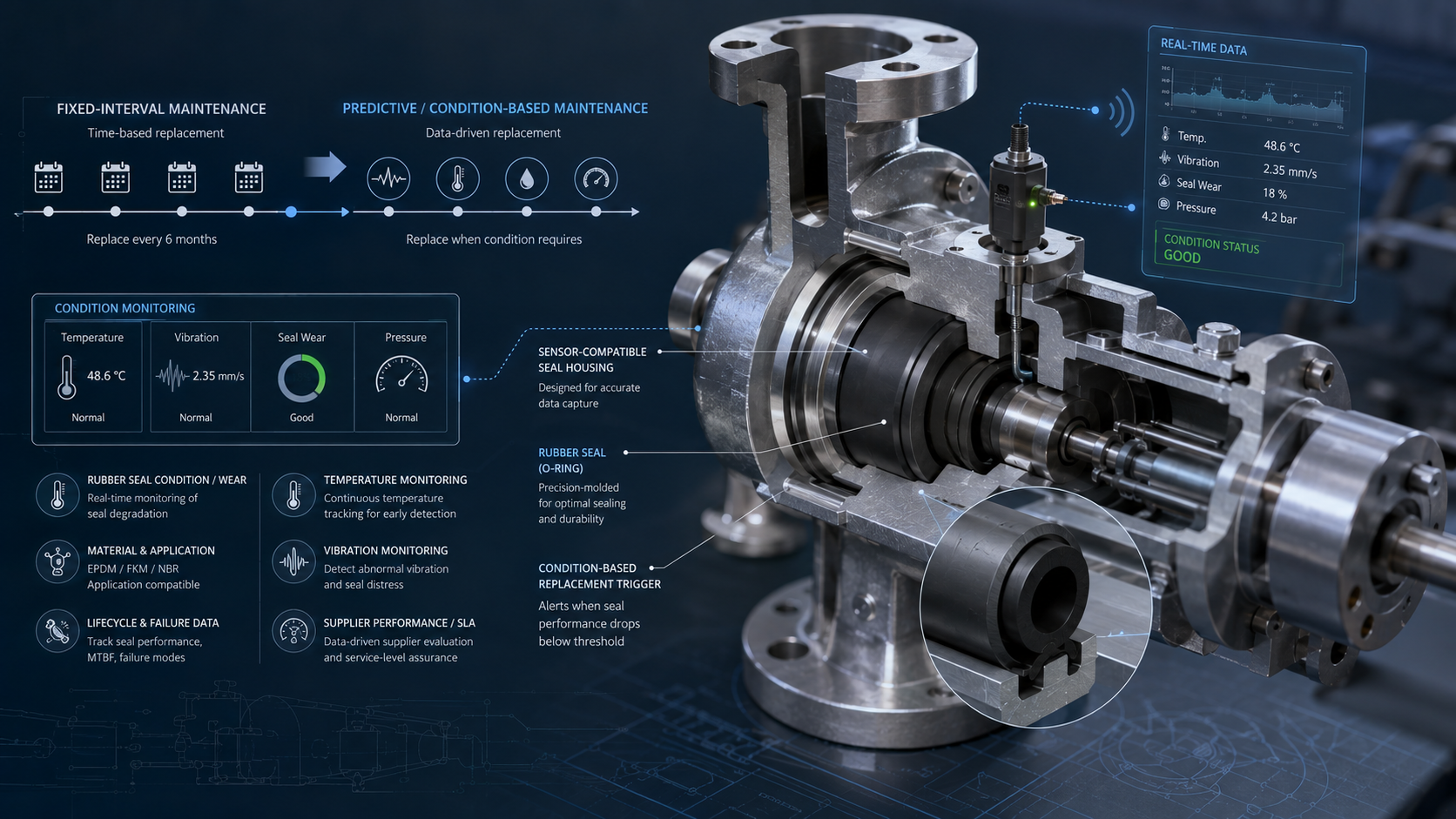
- This is shifting seals from fixed-interval replacement to condition-based decisions.
- Suppliers now need to offer sensor-compatible housings and share lifecycle/failure-mode data, not just parts.
- Sensors detect degradation — they don’t fix a seal that was never matched to the application’s duty cycle.
- Revisit supplier SLAs to include data-sharing and condition-based triggers, not just fixed delivery schedules.
“Sensors tell you when a seal is failing. Good design is what stops it from failing in the first place.”
— Suganthan, Director, DS Techno Rubber Private Limited
From Fixed Intervals to Condition-Based Decisions
For decades, seal replacement ran on a calendar: pull it at 12 months, or after X operating hours, regardless of actual condition. Predictive maintenance is breaking that model. Adoption has reached roughly a third of industrial facilities, and where it’s implemented, unplanned shutdowns drop by a similar margin.
What Changes in the Supplier Relationship
A condition-based program needs different things from a supplier than a fixed-interval one did:
- Seal housings compatible with vibration and temperature sensors.
- Willingness to share performance and failure-mode data that feeds your monitoring system.
- SLA language built around data-sharing and condition-based triggers, not just delivery schedules.
Sensors Detect Problems -- Design Still Prevents Them
It’s worth being direct here: the best condition-monitoring program in the world can’t compensate for a seal compound that was never matched to the application’s actual duty cycle in the first place. Sensors tell you when a seal is degrading; they don’t fix a fundamental material or design mismatch.
Fixed-Interval vs. Condition-Based: A Quick Comparison
The table below summarizes the practical differences.
| Factor | Fixed-Interval Replacement | Condition-Based Replacement |
|---|---|---|
| Replacement trigger | Calendar/hours elapsed | Measured condition (vibration, temperature, wear) |
| Unplanned shutdown risk | Higher | ~34% lower on average |
| Supplier requirement | Reliable standard part delivery | Sensor-compatible housings + shared data |
| Waste from early replacement | Common | Minimized |
If your plant is moving toward condition-based maintenance, revisit your seal supplier relationship now — before your next contract renewal locks in the old model.