Summary
Rubber diaphragms for automotive fuel pumps are made from NBR (nitrile) for standard E10 gasoline or Viton (fluoroelastomer) for E15/E85 and high-heat applications, chosen based on ethanol resistance, temperature range, and fatigue life. OEM buyers should verify SAE J1737 permeation testing, ASTM D471 fluid immersion data, and flex-fatigue cycle results before qualifying a diaphragm supplier.
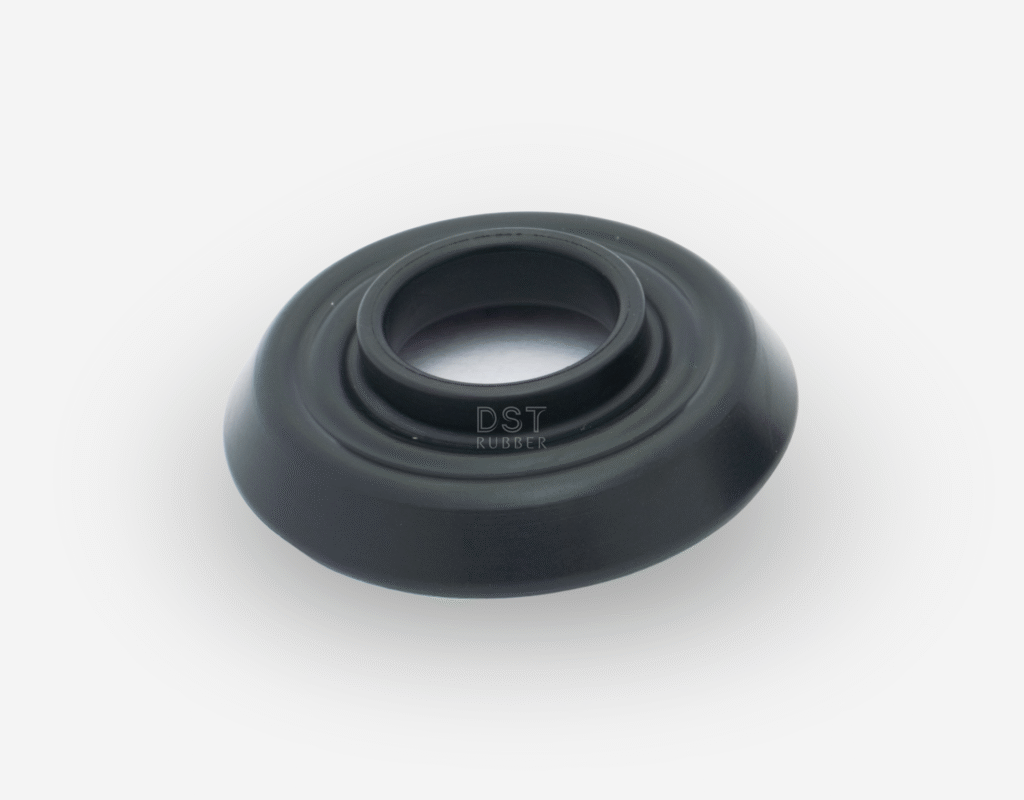
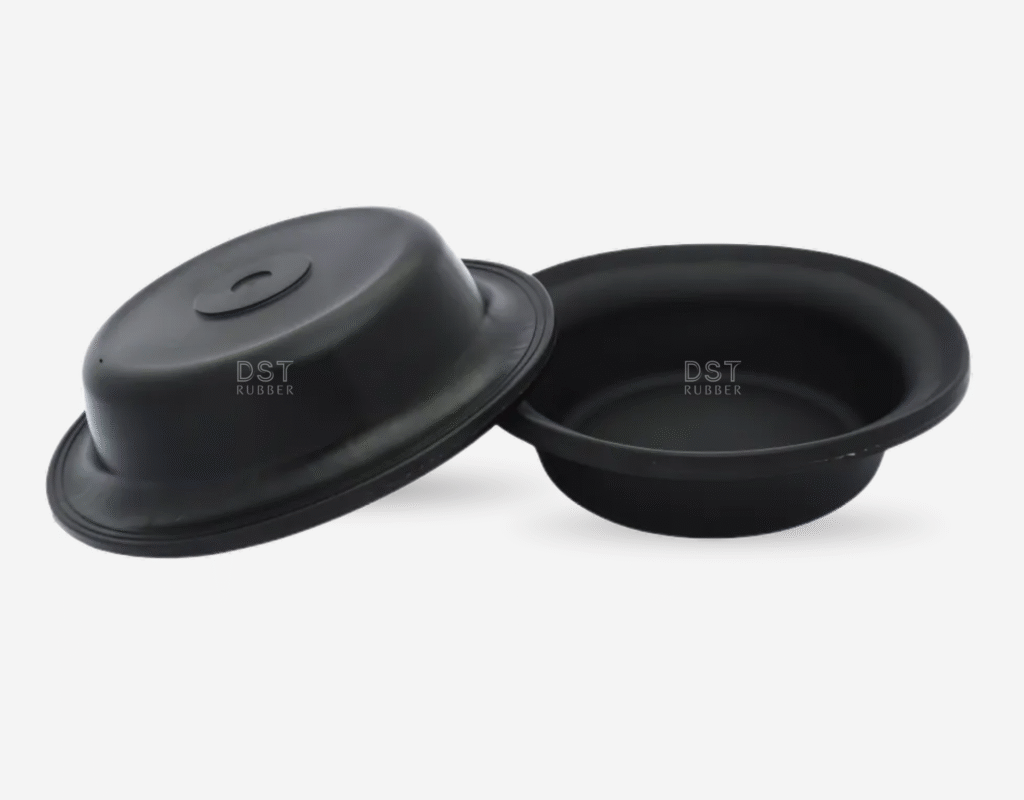
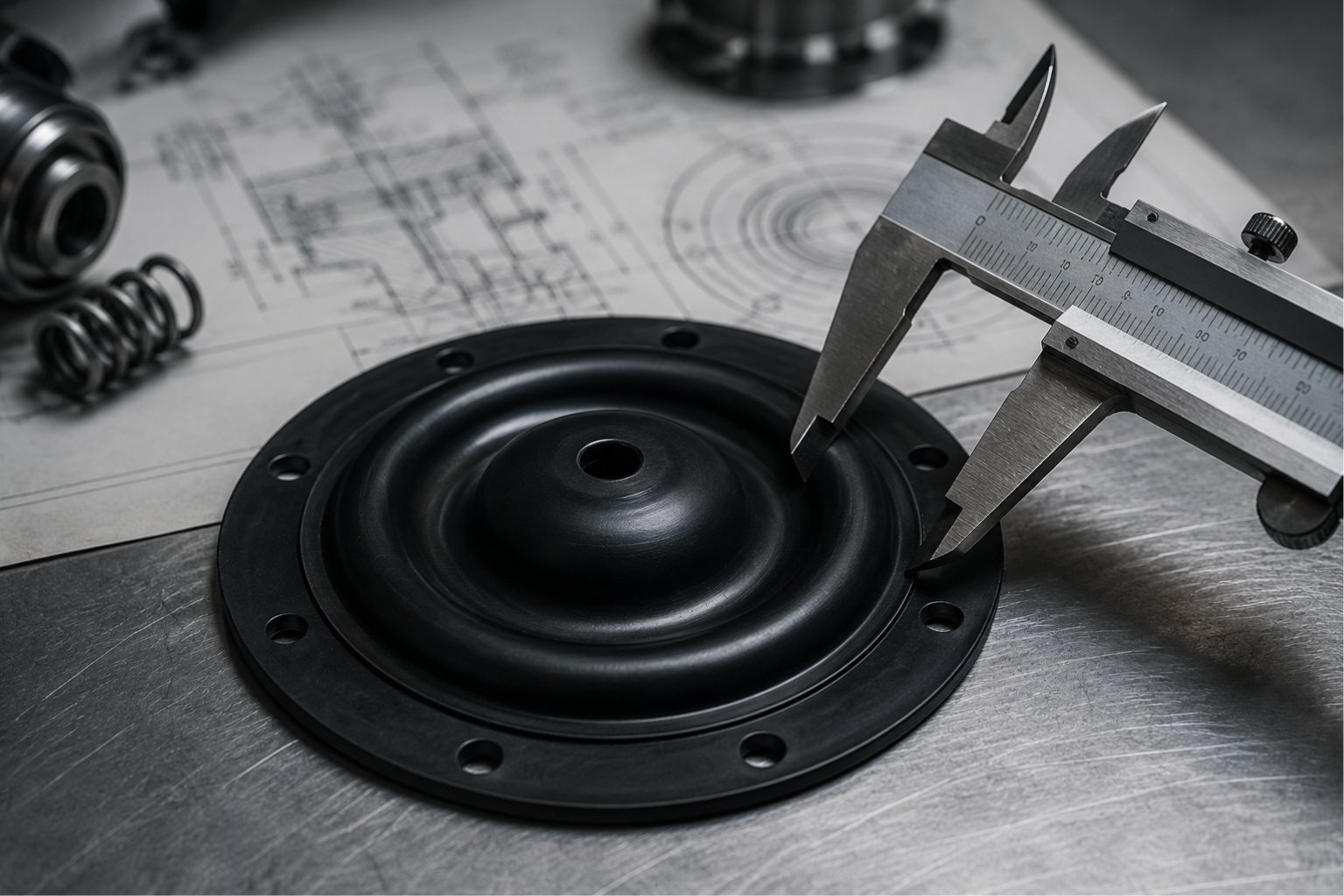
A fuel pump diaphragm looks simple until it fails in the field. When it does, the warranty claim rarely reads “diaphragm failure.” It reads “no start,” “rough idle,” or “fuel pressure loss,” and the root cause takes a technician an hour to trace back to a single flexing disc of rubber that has hardened, swelled, or cracked at the bead. For an OEM sourcing team, the diaphragm is a small line item with an outsized capacity to generate returns. Getting the material and geometry right the first time matters more here than in almost any other rubber-to-metal component on the vehicle.
What the Diaphragm Actually Does Inside the Pump
In a mechanical fuel pump, the diaphragm flexes on every rotation of the camshaft lobe, creating the vacuum that draws fuel from the tank and the pressure stroke that pushes it toward the carburetor or injector rail. In an electric in-tank pump, a smaller diaphragm often regulates pressure rather than generating flow, damping pulsation so the injectors see a stable rail pressure. Either way, the component sees constant flex fatigue, direct immersion in fuel, and, depending on engine bay placement, elevated ambient heat. That combination of mechanical and chemical stress is why generic rubber sheet stock has no place in a fuel pump assembly.
NBR vs Viton: The Chemistry That Decides Fuel Compatibility
Nitrile (NBR) Diaphragms
Nitrile butadiene rubber gets its fuel resistance from its acrylonitrile (ACN) content. Higher ACN grades, typically in the 34 to 41 percent range, swell less in gasoline and resist softening better than low-ACN compounds built for general oil service. NBR remains the workhorse material for E10 gasoline systems because it delivers strong volume-swell control per ASTM D471 immersion testing at a lower cost than fluoroelastomers, and it holds up well across the -20°F to 250°F range most passenger vehicle fuel systems see.
Fluoroelastomer (Viton) Diaphragms
Once a fuel system runs E15 or flex-fuel blends up to E85, standard NBR starts to show excessive swell and a drop in tensile strength over time. Viton compounds resist that degradation because their fluorine content lowers permeability and swell even in high-ethanol and biodiesel-blended fuels. Viton also tolerates sustained temperatures above 300°F, which matters in engine bays where the fuel pump sits close to exhaust routing. The tradeoff is material cost, so OEM buyers should treat Viton as a specification decision driven by fuel type and duty cycle, not a default upgrade.
Design Factors That Matter as Much as Compound Selection
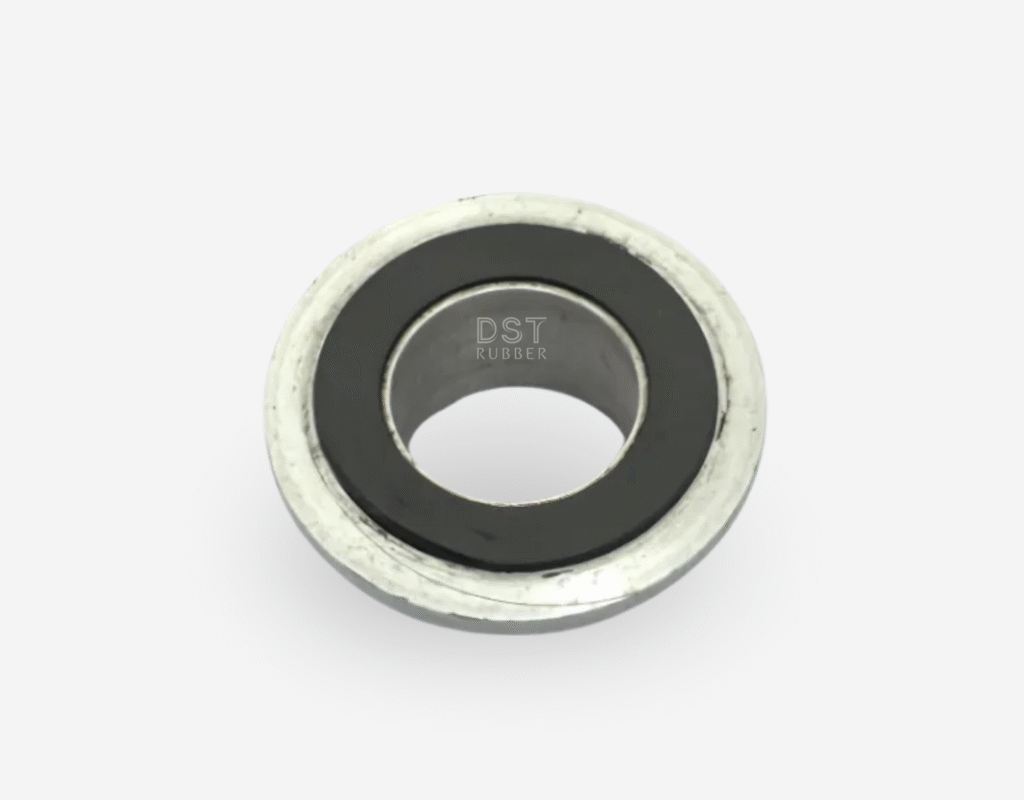
- Fabric reinforcement: a nylon or polyester scrim laminated into the rubber controls burst pressure and prevents the diaphragm from ballooning under pump stroke pressure.
- Durometer and thickness uniformity: inconsistent Shore A hardness across the diaphragm face changes flex response and shortens fatigue life, which is why thickness tolerance control during molding is not optional on this part.
- Bead geometry: the sealing bead has to maintain contact pressure across the full temperature range without taking a permanent compression set, which is measured against ASTM D395.
OEMs sourcing custom rubber diaphragms for fuel systems should ask a supplier for compression set data at operating temperature, not just at room temperature, since that is where most bead-sealing failures actually originate.
Testing Protocols an OEM Buyer Should Ask For
Fuel permeation testing under SAE J1737 tells you how much hydrocarbon vapor escapes through the diaphragm wall over time, a figure that matters directly for evaporative emissions compliance. ASTM D471 fluid immersion data over 70 and 168-hour intervals shows volume swell and hardness change in the actual fuel blend the vehicle will run. Flex-fatigue cycle testing, typically run to simulate several hundred thousand pump strokes, confirms the diaphragm will outlast the warranty period rather than just pass an initial burst test.
Sourcing a Fuel-Grade Diaphragm from a Compliance-Ready Partner
California’s evaporative emission requirements and the broader EPA framework push OEMs toward lower-permeation materials well before a federal mandate forces the issue nationwide, which means a fuel system diaphragm specified today should already account for tomorrow’s tightening limits. DS Rubber engineers fuel resistive diaphragms and nitrile fuel diaphragms to the ACN levels and fabric reinforcement schedules that fuel system integrators actually specify, backed by custom rubber molding expertise built specifically around automotive OEM tolerances. If your sourcing team is qualifying a new fuel pump diaphragm supplier, request a custom quote and our engineering team will walk through the material data sheet against your fuel blend and duty cycle before you commit to a production run.